
Dangers of short-term exposure to wildfire smoke
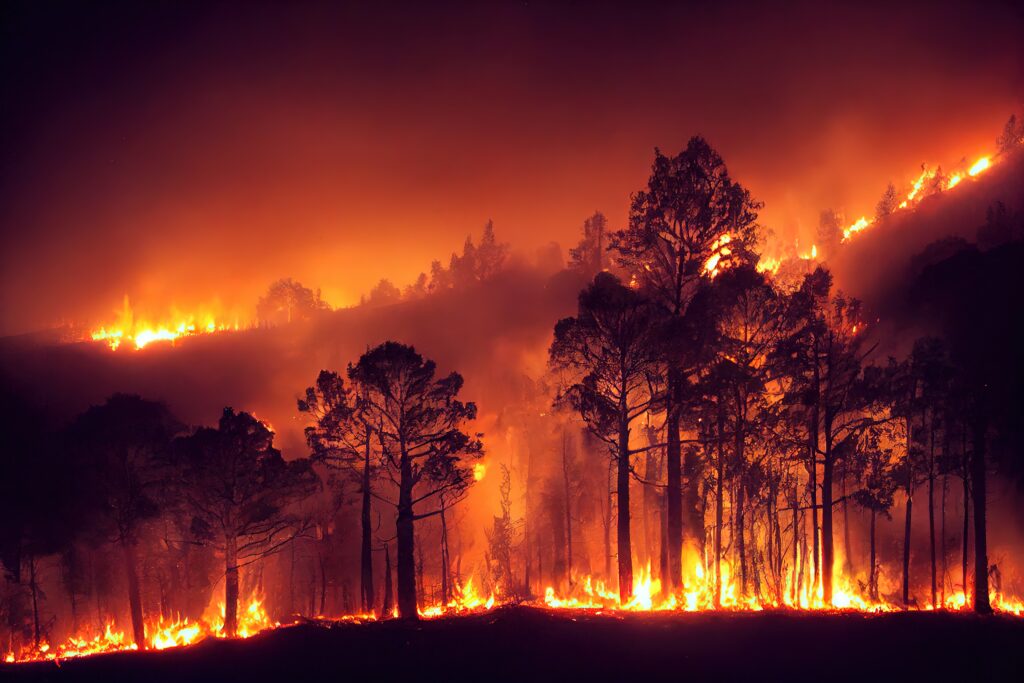
Nearly the entire U.S. is threatened by wildfires, directly or indirectly. As scary as it is to be in the path of a raging fire, smoke plumes release gases and particulates that carry hundreds and even thousands of miles on the wind. The World Health Organization (WHO) considers the amounts of fine particulate matter released by these fires hazardous. At these concentrations, the particulates pose significant risks to the lungs, the brain’s ability to function normally, and the nervous system. The Environmental Protection Agency (EPA) developed its air quality index to provide guidance to help people, particularly those who are unusually sensitive, take proper precautions. The air quality index (AQI) takes into account particulate matter and gases such as ozone. Wildfires typically cause outdoor air quality levels that are unhealthy or worse on the AQI scale. Indoor air quality (IAQ) can be even worse than outdoor air without the right filters. How Air Filtration Can Help If you are located near a wildfire: If your area is prone to wildfires: The Case for MERV 13 The fine particulates from wildfire smoke of greatest concern are those in the PM2.5 range. Particles in this range are 2.5 microns in diameter or smaller, roughly 30X smaller than the width of a human hair. Particles of this size stay suspended in air for long periods of time, can travel long distances, and can penetrate deep into the lungs, causing serious health problems. Nearly the entire U.S. is threatened by wildfires, directly or indirectly. As scary as it is to be in the path of a raging fire, smoke plumes release gases and particulates that carry hundreds and even thousands of miles on the wind. The World Health Organization (WHO) considers the amounts of fine particulate matter released by these fires hazardous. At these concentrations, the particulates pose significant risks to the lungs, the brain’s ability to function normally, and the nervous system. The Environmental Protection Agency (EPA) developed its air quality index to provide guidance to help people, particularly those who are unusually sensitive, take proper precautions. The air quality index (AQI) considers particulate matter and gases such as ozone. Wildfires typically cause outdoor air quality levels that are unhealthy or worse on the AQI scale. Indoor air quality (IAQ) can be even worse than outdoor air without the right filters. How Air Filtration Can Help If you are located near a wildfire:
What You Need to Know about Indoor Air Quality (IAQ)

Pollution Levels Indoors Can Be 5 Times Higher Than Outdoors Indoor Air Quality (IAQ) is a term that refers to the air quality in your building, breathed in every day by the building’s occupants. The pollution levels in this indoor air can be up to 5 times higher than outdoor levels (in many cases up to 100 times higher), and people spend more than 90% of their time indoors! Additionally, poor IAQ ranks as one of the top five environmental risks to public health, but is often overlooked by key decision makers. Extensive Studies Show: 34% of American workers feel that poor IAQ had caused them to miss work. For every 1000 workers, poor IAQ results in 600 sick days per year. Up to 65% of asthma cases in school-aged children could be prevented with proper IAQ. Three to four million hospital-acquired infections occur annually, with up to 80,000 fatalities. Up to 1/3rd of hospital-acquired infections involve airborne transmission. There are 175,268 pages on IAQ in the U.S. Code of Federal Regulations. 56% of commercial maintenance teams admitted that their IAQ maintenance is not carried out per IAQ guidelines. Lack of proper air filtration is the #1 cause of poor IAQ. The Air Inside Your Building Can Contain: Have Concerns About Your Facility’s Air Quality? Here is How We Can Help: The first step in AAF’s collaborative and consultative approach is to conduct a thorough air filtration audit, where we analyze your current state. We can then give you detailed benchmark data based upon the audit results, as well as a life cycle cost report and a standardized list of filters. As the leading provider of air filtration solutions, we can help you create superior air quality in your building and better manage your HVAC system. Here are a few benefits you will get from an air filter audit:
Air filtration is a major component of sustainable design

Sustainable Design Air filtration is a major component of sustainable design, which is both cost-efficient and resource-saving. 78% of Americans agree that corporations have a responsibility to adopt green standards like clean air. In addition, green buildings use on average 26% less energy, emit 33% less carbon dioxide, use 30% less indoor water, and send 50%-75% less solid waste to landfills and incinerators. Thinking green is a great way to maintain energy efficiency, minimize costly downtime, and extend the lifespan of your equipment. Addressing Environmental Issues While it is often assumed that outdoor air is more polluted than indoor air, the fact is that poor Indoor Air Quality (IAQ) ranks as one of the top five environmental risks to public health. Poor IAQ in buildings can lead to allergic reactions, aggravation of respiratory conditions, asthma attacks, eye irritation, coughing, irritability, and the inability to concentrate. The air inside your building can contain: Between respiratory illness, allergies, and asthma, along with increased worker comfort, experts estimate that improved indoor air quality would produce an annual U.S. savings of up to $235 billion. As a member of the U.S. Green Building Council (USGBC), AAF has joined with leaders from every sector of the building industry to promote buildings that are environmentally responsible and sustainable, profitable, and healthy places to live and work. Social Responsibility Social responsibility comes down to optimizing air quality while choosing products that minimize total life cycle costs, including energy consumption and the amount of landfill waste by changing filters too frequently. AAF is committed to identifying further opportunities to prevent pollution, reduce waste, and conserve our natural resources. We pride ourselves on taking a collaborative and consultative approach to help our customers optimize performance and lower their total cost of ownership, all while taking the well-being of our planet into consideration at all times. Optimized Air Filtration Strategies Improve Sustainability A thorough air filter audit of your HVAC Systems is the first step that AAF takes, in order to provide you professional guidance and analysis for cost savings and liability reduction. By conducting this audit, we strive to understand your current state and your complete air filtration needs, applications, and goals for total air quality. This customized air filtration survey costs you nothing and could give you significant benefits by helping you save money, reduce risk, and save time.AAF can also assist you in the processes required to earn Leadership in Energy and Environmental Design (LEED®) credits and become more sustainable. The LEED Green Building Rating System, administered by the U.S. Green Building Council, is the nationally accepted benchmark for designing and sustaining green buildings. Optimized air filtration strategies contribute to four of six LEED credit categories: AAF’s expertise in airborne particulate and gaseous filtration systems, combined with our innovative product line, uniquely qualifies us to assist you throughout the LEED accreditation process.